American Crow (Corvus brachyrhynchos): The Standard North American Corvid
Expanding on the introductory to crows is part 1 of what could possibly be done in multiple parts focusing on the local species for much of the country, American Crow.
Physical Description & Identification
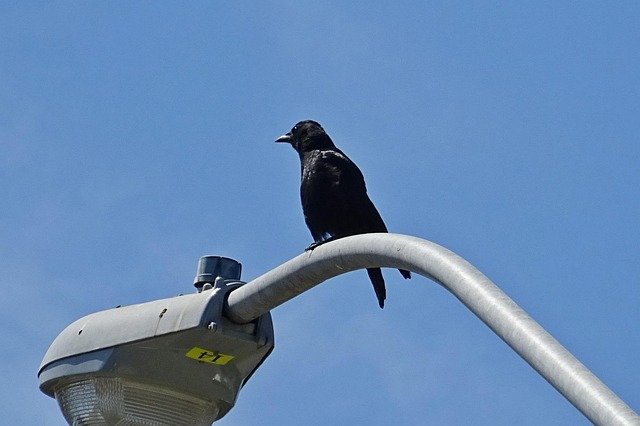
The American Crow is the standard-issue, all-black crow of North America. Key identifiers include:
Description Livery: Jet-black with some purpleish or blue sheen when exposed to direct light.
Size Medium-large, 40-53 cm (17-21 in) long and the wingspan is 85-100 cm (33-39 in).
Bill: Rather stout, all black.
Call: The familiar, squawking, repetitive “caw-caw-caw.” In addition to these roars, they make a wide variety of other sounds for communication.
In Flight Wings broadly rounded, with wingtip feathers fanned out like fingers. They have steady, undulating flight with wingbeats while just an afternoon group of scouts land along the close by riverbanks.
How to Distinguish from Similar Birds?
Ravens are much larger and have a wedge-shaped tail (as opposed to the crow’s fan-shaped tail), shaggy throat feathers, and deeper, more croaking calls. On the wing, ravens glide and crows flap.
Fish Crow: Fairly small and more coastal, seen along the coasts and in waterways. Its voice is the best identifier, a nasal two-snote “uh-uh” or “cah-cah” as otherwise they’re virtually indistinguishable.
Habitat and Distribution
As befits such adaptive birds, the American Crow shows up in practically all categories of North America’s habitat, including:
Habitat: Forests, woodlands, fields, beaches and riverbanks.
Human modified landscapes: Agricultural fields, the suburbs, parks and inner cities. They thrive alongside humans.
Behavior and Intelligence
This species is the published definition of corvid smarts.
FAMILY LIFE They tend to be cooperative breeders. Young from earlier broods can remain with the parents for several seasons and help raise new broods, an uncommon practice among birds.
Social Roosting: During the non-breeding season, they come together in massive communal roosts of tens of thousands. They tend to be in urban areas, which are warmer and safer.
Problem-Solving: They are known to use tools, distinguish human faces (and grudges!)., hurling nuts into the road for cars to crush them and intricate social learning.
Diet
They are opportunistic omnivores and will eat what is seasonally available:
Insects, earthworms, seeds, berries, fruits.
Small vertebrates: mice, frogs and bird eggs/nestlings.
Carrion (roadkill), trash, and human food remnants. They play a key ecological role as scavengers.
Cultural Significance
Among North American indigenous cultures, the crow has been seen as a trickster, a transformer and a messenger—a figure that can represent the world by its humor. Today, it is occasionally interpreted as a harbinger but more often admired for its obvious intelligence.
Conservation Status
Abundance and Range The American Crow is a bird of wide distribution, found in most parts of the country. They face threats from:
West Nile Virus: The arrival of this affliction triggered dramatic declines in some regions, since crows are extremely vulnerable.
Interactions with humans: Occasionally harassed as pests to crops or for scavenging trash.
Collisions: With vehicles and buildings.
Yet, with these perils abound a bright and intelligent nature which have caused the American Crow to be a constantly resilient icon that stands as proof of life within this landscape. Their raucous caws, a nonstop reminder of wild intelligence succeeding in our own back yards.
Crow (Corvus corone): The Clever Continental Scavenger
Hopping from North America to the great expanses of Europe and Asia, we meet another corvid with incredible intelligence and flexibility: the Carrion Crow. Frequently regarded as the ecological equivalent of American Crow, it has its own unique position in culture and ecology.
Physical Description & Identification
The Carrion Crow is the all-black crow that is seen in Western Europe throughout much of western Europe and eastern Asia. Key features include:
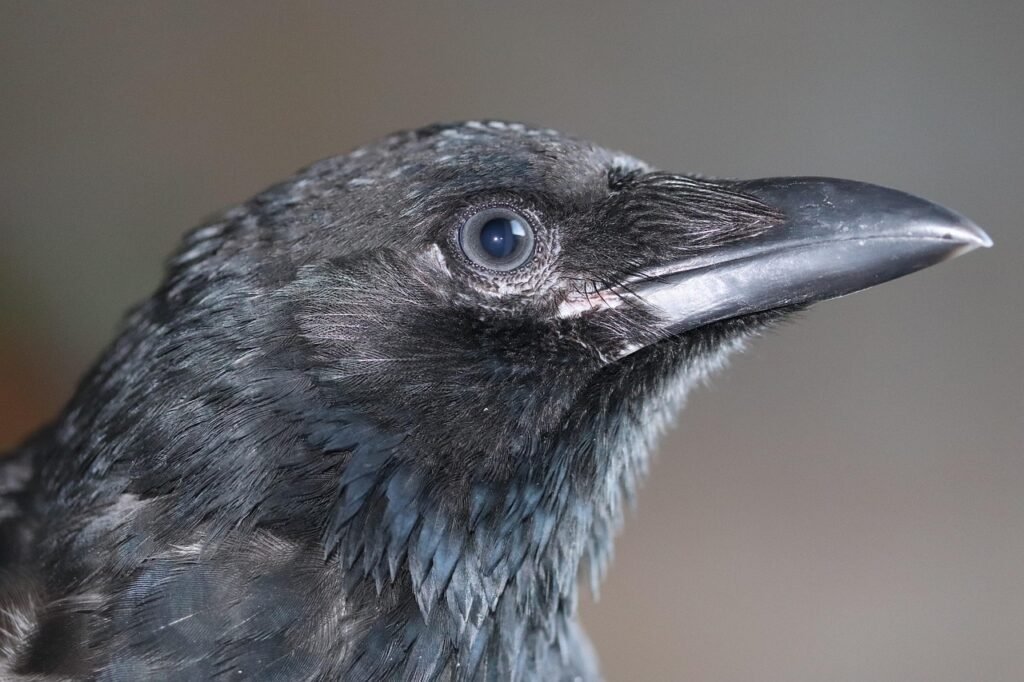
Adult: Black with a greenish- or bluish-purple sheen, particularly in bright sunlight. It’s without grey patches, unlike some of the relatives.
Description: 44–52 cm (17–20 in) long, with a wingspan of 84–100 cm (33–39 in). Its dimensions are similar to those of introiteque the American Crow.
Bill & Legs: Short and entirely black.
Voice: The call of the Lanner Falcon is a deep, husky, echoing “kraaah.” It has a number of other calls for social use.
In Flight: Direct, powerful flight with strong wing beats. The tail is more squarish when fanned.
How do you distinguish it from lookalike birds?
Hooded Crow (Corvus cornix): Its near relative. For years, they were thought to be a single species. The body of the Hooded Crow is a stark grey while its head, wings and tail are black. They come in contact to form a dramatic hybrid zone across central Europe.
Rook (Corvus frugilegus) – Like Jackdaws, Rooks are far more sociable than Carrion Crows, and they have a steeper forehead with a peaked top to the crown and a bald patch of greyish white skin around the base of their bill. They usually inhabit large noisy colonies, known as “rookeries.”
Common Raven: Larger in size with a heavier bill, shaggy throat feathers and a wedged shaped tail.
Habitat and Distribution
The Carrion Crow, unfettered generalist of the Palearctic.
Range: Throughout Western Europe (from the British Isles and Iberia eastward), Eastern Asia, including China, Japan and Korea.
Hybrid Zone: In a narrow band from Scotland eastwards to Central Europe and thence to the Balkans, its genes meet those of the grey plumaged Hooded Crow in an extensive hybrid zone.
Behavior and Intelligence
This corvid demonstrates the well known intelligence of these birds in many different way.
Society: Although generally found in pairs or family groups, common ravens are less inclined to congregate with the type of colossal communal roosts so often formed by American crows, although winter roosts may be fairly large. They become extremely territorial during the mating season.
Problem-Solving & Tool Use: Carrion Crows in Japan will use cars to crack nuts. And they’re adept at exploiting food sources, from yanking up anglers’ lines to robbing birds.
Diet
As its name suggests, carrion is a staple, but what it eats is wide-ranging.
Scavenging: A necessary cleaner of streets and countryside, eating dead mammals, birds and fish.
Diet Live insects, earthworms, small mammals, eggs and nestlings of other birds.
Plants: Seeds, grains, fruits and nuts.
Human Source: Opportunistic on garbage, litter and unattended food. In cities, vermin can be observed systematically pursuing these bags in search of food.
Cultural Significance
The European raven, on the other hand, plays a range of roles in European folklore. It is frequently associated with:
Death and the Battlefield: It was drawn to carrion, associating it with war and death.
Omen and Prophecy: Considered a bad omen however also wise, knowing.
Contemporary View: Now it is growing in popularity with the general public, as its occult cunning and urban acclimation becomes more clear.
Conservation Status
He has condemned the beautiful Carrion Crow so often and in such strong phrases! Its populations are stable or even increasing, especially in urban locations.
Threats: It is persecuted in some rural areas where it is considered a threat to gamebirds and lambs. It is susceptible to West Nile Virus just like its American cousin.
Resilience: Its smarts, its broad-based diet, and a happy coexistence with human animals keep it going on two continents.
The Carrion Crow is essentially the owlish genius of the avian denizens of the Old World. Its glossy black silhouette is a fixture in both rural and urban landscapes,
the ultimate savvy survivor whose commanding “kraaah” makes an indelible soundscape from Scotland’s crags to Japan’s temples.