
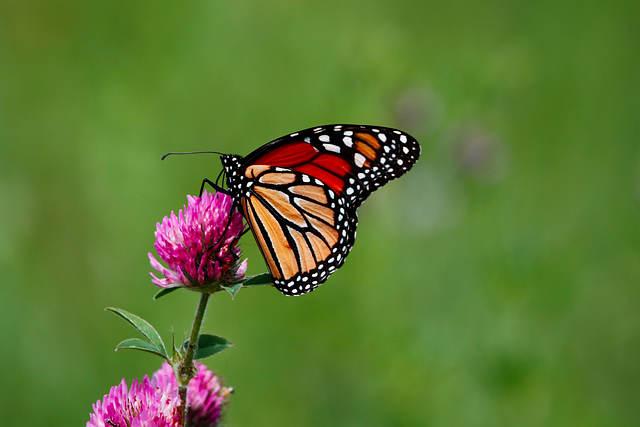
Monarch Butterfly
The Monarch Butterfly is perhaps the best known and most recognized butterfly in the world. It is famous for its orange wings, which are bright with black veins and white spots on the edges. The Monarch butterfly is a beauty and a wonder in terms of its amazing long-range migration.
Where Does the Monarch Butterfly Live?
Monarch butterflies can be seen primarily in North America, especially the United States, Canada and Mexico. In warmer months, they live in the United States and southern Canada. Millions of Monarchs fly up to a thousand miles south during the fall, towards central Mexico or coastal California, where temperatures are warmer.
Types of Monarch Butterflies
The Monarch butterfly comes in three species:
Danaus plexippus (North American Monarch)
Danaus erippus (South American Monarch)
DANAUS CLEOPHILE (The West-Indies)
The North American Monarch is the best known of these due to it’s huge seasonal migration.
Lifespan of the Monarch Butterfly
The majority of butterflies live just a few weeks, but the Monarch is different. An average Monarch only lives between 2 and 6 weeks. But the moving generation, also known as the
“Methuselah generation,” should antipate living 8 or even 9 months — a remarkably long life among common butterflies.
Size of the Monarch Butterfly
The Monarch 8.9 to 10.2 cm (3-1/2 to 4) in wingspan. It isn’t the largest butterfly in the world, but it’s big compared to most other butterflies.
Wing Patterns and Lines
Those black lines on the wings of a Monarch butterfly are veins with rebar inside to stiffen and provide structure. The orange and black is warning to predators.
Caterpillars of the monarch butterfly are known to feed on milkweed plants that are toxic. These toxins remain in the butterfly’s body, making it toxic to birds and other predators.
When Is the Best Time to See Monarch Butterflies?
Monarch butterflies are generally found in the spring and summer. It’s when milkweed plants do their growing when Monarchs can lay eggs and eat.
They migrate in the fall which is one of the most fascinating natural events in the insect world.
Importance of Monarch Butterflies
Monarch butterflies are vital as pollinators, and are an indicator of environmental health. Unfortunately, their numbers have been decreasing because of deforestation, climate change and loss of milkweed.
The Monarch Butterfly is absolutely amazing. From its wild look to the holy grail of migrations and long life, it fascinates scientists as much as romantic admirers.
To save Monarch butterflies we have to save the natural world upon which they depend.
Swallowtail Butterfly

We all commonly know the Swallowtail Butterfly or Papilionidae to be one of the most elegant and biggest butterfly families of insects in terms of numbers.
It is well known for having tail-like extensions on its back wings, resembling a bird swallow’s tail—hence the name. Swallowtail butterflies are famous for their vivid colors, beautiful patterns and their significance in nature.
Where Are Swallowtail Butterflies Found?
Swallowtail butterflies are found on every continent except Antarctica, including Asia, Europe, North America, Africa and Australia. They are commonly found in gardens,
woodland, grassland, riverside and open country. These butterflies like warm and sunny habitats with many flowering plants.
Types of Swallowtail Butterflies
Estremità delle ali con Code macroscopiche There are over 550 species of Swallowtail butterfly in the world. Some well-known types include:
Each types is distinguished by colors, patterns and sizes.
Lifespan of the Swallowtail Butterfly
The average lifetime of the Swallowtail butterfly species is 2-4 weeks when in adult form. But if counting all stages of the life cycle — egg, caterpillar, pupa and adult — it can take up to a 1-2 months depending on species and climate.
Size of the Swallowtail Butterfly
Swallowtail Butterfly Swallowtails are some of the flying insects.
Their wingspan typically measures between 7 to 15 cm (3 to 6 in). And a few species,
such as the Giant Swallowtail shown here, can grow even larger.
Wing Tails, Lines, and Patterns
These tail-shaped projections on their wings now have the additional defence of confusing predators and leading them to attack a wing rather than the body. The lines and colorful patterns on their wings come in handy for many things:
Protection from predators
Camouflage
Attraction of mates
Warning signals in some species
Some Swallowtail caterpillars can also emit a smelly odor with the help of a special organ, called an osmeterium, to repel enemies.
When is the Best Time to Spot Swallowtail Butterflies
We are familiar with swallowtail butterflies in spring and summer. In warmer areas, they are present from early spring to autumn. They are more active on sunny days.
Importance of Swallowtail Butterflies
Swallowtail butterflies contribute to pollination and healthy ecosystems. They are in here to give you an impression of neat, Harmonious world.
The Swallowtail Butterfly: A symbol of nature’s grace and beauty. Thanks to its big size, exotic wing tails and the sheer number of species within this hugely popular family it remains a favorite among butterfly enthusiasts worldwide.
Protecting these habitat and nectaring areas are critical to the survival of these spectacular butterflies for future generations.
Painted Lady
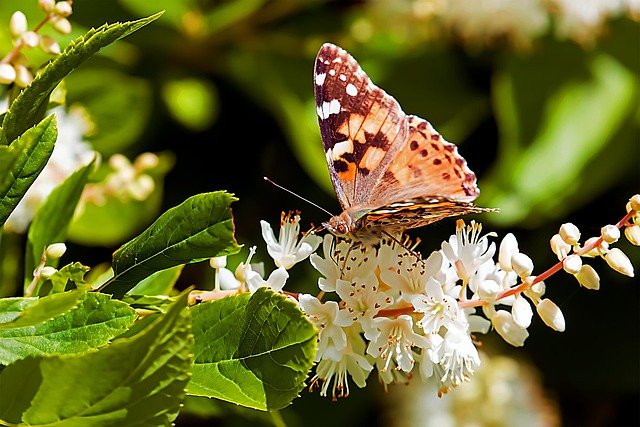
Painted Lady Butterfly
The Painted Lady Butterfly (Vanessa cardui) is one of the most recognized butterflies on the planet. They are known for their striking wing patterns of orange, white and black, and their hovering flight. Unlike most other butterflies,
The Painted Lady butterfly is present worldwide, except Antarctica. It is found in Europe, Asia, Africa, North America and Australia. This butterfly can be found in a wide variety of locations which include gardens, grasslands, deserts, farmland habitats and open fields so it is one of the most adaptable butterflies when it comes to habitat preferences.
Types of Painted Lady Butterflies
The Painted Lady, also called the cosmopolitan butterfly, is best known as one species — Vanessa cardui — but it’s a member of a closely related group of butterflies in the Vanessa genus. While there may be some regional color and size differences, it is considered to be the same species globally.
Life Span of the Painted Lady Butterfly
The adult Painted Lady butterfly typically survives 2-4 weeks. But they fly and breed in several generations, so the whole population lives all year.
Size The Painted Lady Butterfly
The wingspan of the Painted Lady butterfly is anywhere from 5 to 9 cm (2–3.5 in). It is a medium-sized, strong flying butterfly.
Wing Patterns and Lines
Painted Lady wings have orange and brown patches on them marked with black bands and white spots. On the underside of their wings are eye-like spots, which makes it easier to frighten potential predators. They also serve to camouflage the butterfly when it’s at rest, it folds its wings closed.
When To See Painted Lady Butterflies
The butterflies typically appear in spring and summer. In some places, they follow rainy seasons, when the plants can grow so fast. The big migrations have occurred in late spring and early fall.
Importance of Painted Lady Butterflies
These butterflies are pollinators and they are essential for the environment. Because they can inhabit such varied terrain, scientists use them to study climate change and migrations.
What with the painted Lady Butterfly’s travelance this little critter is a regular gypsy in its own right. It’s one of nature’s most successfuland fascinating butterflies;
it has spread across the world in the past 200 years, and thanks to its beautiful wing pattern and strong flying ability. Its ability to evolve has captivated many as a symbol of resilience, and ultimately, survival.
Blue Morpho
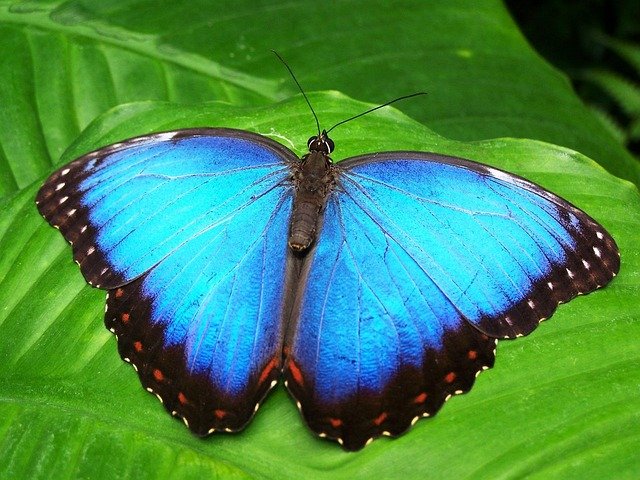
Blue Morpho Butterfly
The Blue Morpho Butterfly (Morpho menelaus) is one of the most popular and beautiful butterflies in the world. Its shiny, iridescent blue wings give it an
enchanting appearance in sunlight. The Blue Morpho is admired not for its beauty alone, but also for its incredible size and distinctive behaviors.
Where Do Blue Morpho Butterflies Live?
Blue Morpho butterflies are primarily of the rainforests of Central and South America, from Brazil to as far north as Costa Rica and Venezuela. They inhabit thick forest,
riparian woodland and the edge of forests but also resides on the ground near to forrest and will frequent green foliage when not in flight.
Types of Blue Morpho Butterflies
The Blue Morpho is a type of Morpho butterfly and there are many mebers in this genus. Some well-known ones include:
Morpho menelaus (common Blue Morpho)
Morpho didius (Didius Morpho)
Morpho peleides (Peleides Morpho)
All of these are well known for the brilliant blue upper wing and brown mottled undersides.
Life span of the Blue Morpho Butterfly
Least a thousandThe Blue Morpho butterfly: Blue Morpho butterflies normally have a life span of 115 days from the egg to an adult, but as an adult they only survive up to two or three weeks. There they mate and lay eggs for their next generation.
How Big Are Blue Morpho Butterflies?
The Blue Morpho is amongst the biggest butterflies in the world. Its wingspan can be as long as 12 to 20 centimeters (4.7 to 8 inches), a truly impressive spectacle in the rainforest.
Wing Patterns and Lines
The Blue Morpho’s glowing, turquoise wings are not caused by pigmentation, but due to nanoscale structures in the wings’ chemical make up that reflect light and cause the tiny scales to act like little prisms. The brown underside of the wings has eye spots that serve to camouflage them and fend off predators when the butterfly is resting.
When is the best time to observe blue morpho butterflies?
They are most commonly seen during the wet season when plants and flowers are in full bloom. They are generally encountered in the day and fly slowly over forest clearings or along rivers.
Importance of Blue Morpho Butterflies
Blue Morphos are important in pollination and are an integral component of rainforest ecosystems. Their beauty helps bring focus to the message of saving the rainforest.
The butterfly: the Blue Morpho Butterfly is a stunning representation of beauty and wonder in life. One of the most extraordinary butterflies nature has ever created,
its luminous blue wings and large size are surely an inspiration to all who see it. By saving rainforests, we’re ensuring these stunning animals have a future that spans generations.
Peacock Butterfly
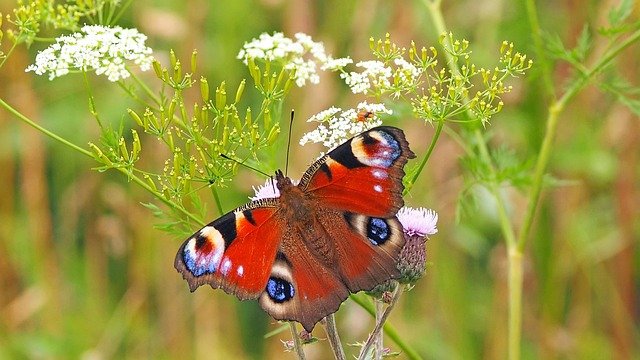
Peacock Butterfly
One of the most magnificent and well known butterflies in Europe is the Peacock Butterfly (Aglais io). Its very extreme eye-like wing patterns
look like a peacock’s tail feathers. These patterns serve as a deterrent to predators, and they also make it a favorite among butterfly collectors.
Where Do Peacock Butterflies Live?
The Peacock Butterfly It inhabits most of Europe, except for northern Scotland and north western Norway. It occurs in gardens, meadows, forest and hedgerows.
It is particularly frequent in the vicinity of nettles, on which its caterpillars feed.
Types of Peacock Butterflies
The Peacock Butterfly is from the family Nymphalidae which gives it the within taxonomy classification of Aglais io. But there are few local subspecies; instead it has a very uniform appearance and shows its characteristic eyespots on the wings.
Lifespan of the Peacock Butterfly
Peacock Butterflies are among the longer-lived of the butterfly troupe. Adults may also live for up to 10–12 months if they overwinter. Adults of most other butterfly species live only for a few weeks.
Size of the Peacock Butterfly
The size of the Peacock Butterfly is 2.5 to 3 inches (6.5 to 8 cms). Though not the biggest butterfly, its bold patterns create an appearance of a larger and more impressive insect.
Wing Patterns and Lines
The eye-shaped markings on the wings act as a defence mechanism, frightening birds and other predators. The bright reds,
blues and yellows also aid in camouflage when they are resting on flowers or the leaf litter. The delicate lines and veins on the wings give them support for flight.
Best Time to Spot Peacock Butterflies
Peacock Butterflies are seen in summer time and late summer. You can also see them in early spring as they wake from winter dormancy. They are mostly diurnal and feed on nectar from flowers.
Importance of Peacock Butterflies
The Peacock Butterfly (Aglais io) is a representation of grace and resilience. Quite remarkable for a European/Asian butterfly in its spots, longevity,
and adaptability. By defending gardens, meadows, and preexisting habitats we can ensure this inundating butterfly adorns our regions for centuries to come.