
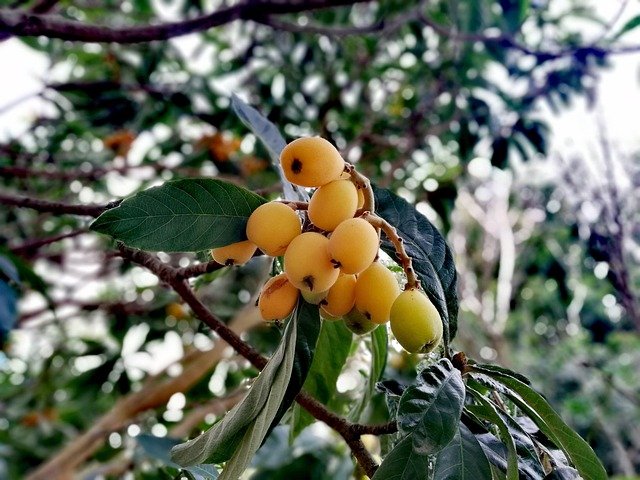
Loquat Tree
A Golden Jewel of the Ecosystem
Introduction: The Winter Fruit-Bearer
The Loquat Fruit Tree, AKA Eriobotrya japonica, otherwise is known as the Japanese medlar has a long history of cultivation in Japan for many centuries primarily for its fruit but also its wood. Not many actually plant nuts and berries in winter and then offer flowers as appetizers.
Detailed Profile & Characteristics
Lifespan A Long-Living Ornamental
Loquats are very strong trees and live long. If taken care of, a loquat tree can exhibit vigorous growth and bear fruit for 30-50 years or longer in perfect frost-free environment. It is a tree that was planted to be enjoyed for generations.
Height and Growth Habit
Loquats are small to medium-sized evergreen trees. They are trees which reach 5–10 meters (16–33 ft) hi, have a thick rounded and attractive foliage. Their over sized, dark green, heavily veined leaves are bold and tropical looking for year round appeal.
Benefits and Uses (For Humans)
Tasty And Healthy Fruit: Yellow, pear-shaped fruit is sweet and tart, loaded with Vitamin A, Vitamin B6, dietary fiber, potassium and manganese. They are consumed fresh or processed into jams, jellies, chutneys and pies.
MedicaItions: The leaves of the loquat tree are well-estabIished in traditionaI Chinese medicines. they include triterpenes beet root and used in the preparation of a soothing tea that is believed to treat
respiratory conditions (cough, phlegm and sore throat), digestive problems and skin irritation. The fruit is also considered a mild sedative and thirst quencher.
Ornamental The loquat is frequently grown as an ornamental in gardens and landscapes beyond its natural range, not only for its fruit, but also as an evergreen tree with large, attractive leaves.
Natural Ecological Importance (Tebi Ahmiyat)
Stabilizing Soil It’s root system is dense enough to keep soil in place on banks.
Evergreen Sanctuary: Being evergreen, it offers year-round shelter and sanctuary for birds and wildlife unlike deciduous trees.
Distinct Phenology : Its most important ecological value is the time of flowering. It flowers late autumn to early winter and fruits in spring so it fills the critical plant gapping through nectar and food resources.
Useful for Animals and Birds (Janwaron aur Parindon ke Liye Zaruri)
The loquat is of particular interest for urban and wild fauna because of the off-season profusion:
For Pollinators (Bees & Insects): A tree with clusters of small, sweetly fragrant, creamy-white flowers in fall and winter. This is a key time when few other nectar sources are around. It is a significant forage source for honey bees and native pollinators, to tide their colonies over during the cooler months.
For Birds The loquat is a bird attractor. In the spring, birds from dozens of species — robins, cedar waxwings and starlings among them, as well as countless domestic local varieties — daredevil it on these such glorious days in their weighty consumption of sweet fruits.
The tree offers both a high-energy food source for migrating birds and a bounty for resident birds raising their young. The thick foliage of this holly provides great nesting and protective cover.
For Other Animals: Squirrels, raccoons, and opossums are all common loquat tree visitors (they like to nibble on the drops fruit). Browsing quality of foliage: The leaves are not a particularly favoured browse for livestock, although it is non-toxic.
Overview What you need to know about loquat
Feature
Description
Common Name
Loquat, Japanese Medlar
Scientific Name
Eriobotrya japonica
Typical Lifespan
30-50+ years
Mature Height
5-10 meters (16-33 feet)
Growth Habit
Evergreen, dense rounded canopy
Key Human Benefits
Fruit: Sweet, nutritious fruit is typically fresh or conserved.
LEAF As medicine: for respiratory & digestive disorders.
Ornamental: Year-round garden beauty.
Ecological Role
Soil getter, important offseason resource (blooms through winter).
Importance for Wildlife
Pollinators: Bees need them during the winter for nectar.
Birds: Important spring food; flocks are drawn for fruit nesting cover.
Fruits are consumed by squirrels, raccoons, etc.
The Loquattree not just a fruit tree for the garden. It is a seasonal indicator species of local ecosystems. Flowering bravely in the winter chill and fruiting golden when spring is just around the corner,
it goes a long way to give pollinators and birds an early-spring burst of sustenance at a time of deep hunger. To plant a loquat is to invest in yearround garden beauty,
a harvest of unusual fruit and the deep satisfaction of contributing however modestly toward life’s delicate web right outside your window.
Such is the evidence of nature’s trickling bounty, that somehow, life will grow even in times when there is little to be found.
An In-depth Look
Introduction: The Unlikely Winter Provider
Rioting the Loquat (Eriobotrya japonica) The Loquat (Eriobotrya japonica) occupies an evolutionary niche like few other plants; it provides a huge bounty of fruit during the bleakest months of winter. While the majority of temperate zone fruit trees snooze in winter,
there’s the loquat bursting into fragrant bloom. It is this one feature that makes it an ecological workhorse, garden oddity and bounty for both men and beast.
Expanded Profile & Lifecycle
Lifespan & Growth Pattern
It saves power by not falling all the leaves every year.
Resistance To Disease: It is known for its remarkable high resistance to pests and heavy tolerance towards the most popular fruit tree diseases.
Adapted Root System: It has good sturdy root system which makes it stable and drought resistant.
Stature and Physical Form
The loquat is no enormous giant but a neat tree of handsome appearance, not too large to be inconvenient.
It is usually up to 5-10m in height with the same spread. Its growth habit is naturally round and dense, so it needs minimal pruning in order to have good shape.
Ornamental Features
Big (15-25 cm long), leathery, dark green above and with a fuzzy, rust-coloured lower surface. They are heavily ribbed and bunched at the ends of their branches, giving them a bold tropical feel.
Smooth, grey-brown on young trees with small fissures developing on older trees.
Dwarf forms (such as ‘Coppertone’) available for small gardens, 2-3m is the maximum height.
Uses by humans: Medicinal, culinary
A. Nutritional & Culinary Benefits
The fruit is a seasonal treat that possesses a multidimensional flavor profile (peach, citrus, mango).
Nutrition: Contains high amounts of provitamin A carotenoids which give it its orange hue, as well as vitamin B6, potassium and dietary fiber. It is low in calories.
Culinary Versatility
Consumed out of hand (peel and discard large seeds).
Savory Uses It is a must in meat sauces and fresh salsas.
Medicinal Uses (The Pillar of Tradition)
The leaves are the most medicinally valued part of the tree, even more so than its fruit according to traditional systems such as Chinese medicine.
Active Compounds: Triterpenes (such as oleanolic acid), tannins, & megastigmane glycosides have shown-inflammatory/antioxidant/anti-viral properties.
Traditional Uses
Respiratory System: Loquat Leaf Tea is the classic treatment for coughing, phlegm build-up and asthma symptoms, as well as sore throat relief. Leaves are frequently mixed with honey.
Skin Health Wash leaves for rashes, sunburn and skin irritation.
Digestive Support Gently astringent, it can also curb nausea and soothe your stomach.
Current Research: Extracts are investigated for application in diabetes, liver disease and cancer but require further clinical study.
Wood & Other Uses
The wood is close-grained, red brown and hard. It is highly valued for small carpentry products, ruler production, and as a source of fuel for smoking meats.
Deep Dive The Importance of Nature(Tebi Ahmiyat)
The loquat’s real genius is its timing in the ecology, filling an absolutely critical niche.
Phenological Niche (Seasonal Timing)
Flowering Late Autumn to Mid-Winter. This is its masterstroke. During lean flower times, its sweet-smelling, nectar-laden blossoms are a boon to the local pollinator scene for survival.
Fruiting: Early to Late Spring. It also ripens its fruit long before summer fruits (think peaches or mulberries) are ready, giving a head start on energy.
Ecosystem Services
Comprehensive Role for Animals & Birds
(JANWARON AUR PARINDON KE LIYE)
It is both a full habitat and a food station.
Season
Resource Provided
Beneficiaries
Ecological Impact
Autumn/Winter
Nectar & Pollen: Produces from fragrant white blossoms.
Honeybees, Bumblebees, Solitary Bees, Hoverflies.
Pollinator Survival. Offers food when little is available, supporting pollinator populations on which reproduction of the entire ecosystem depends.
Spring
Plentiful Sweet Fruit (high sugar).
Feathers Robins, Starlings, Waxwings, Orioles, Barbets cord.bulbul.featheredMany Birds Some birds have feathers. Mammals: Squirrels, Raccoons, Fruit Bats.
Pre-Breeding Energy & Seed Dispersal. Birds gain energy for migration/nesting. The animals eat the fruit and carry seeds away from the parent tree (endozoochory), thus helping forest regeneration.
Year-Round
Dense, Evergreen Foliage.
Bird Seed (Sparrows, Finches) Small Mammals Insects (for laying eggs).
Shelter & Nesting. Protects against predators, sun and rain. Sheltered nesting for birds and habitat for insects (which in turn feed other animals).
Why is it so crucial?
In urban and suburban habitats, where natural food sources are patchy, a single loquat tree is a biodiversity hotspot that helps creatures such as songbirds through the toughest times of the year.
Growing Your Own
Tolerates mild temperate to subtropical climates (USDA zones 8-10). Can survive light frosts, but flowers/fruit wither in hard freezes.
Full sun is ideal for optimal fruiting.
Well-draining, slightly acidic to neutral soils. Able to tolerate most types except waterlogged.
Drought-tolerant once established, but requires regular moisture to set good fruit.
- Why are Bees So Important
- How climate change is affecting the migration of birds
- How do animals survive in the desert without water
- Why you should grow native plants in your garden
- how is The Manchineel Tree Most Dangerous
Usually propagated via grafting to ensure consistent fruit. Seeds are available, but will be variable and need 6-8 years to fruit.
The Garden’s Guardian
The loquatIt’s the ultimate multi-purpose landscape tree, really. It is not a commodity plant planted in massive monocultures for export, but rather a tree of the garden, the community and local ecology.
It offers a triple gift
To People Beauty, yummy fruit, and as medicine the leaves are strong medicinal.
To Wildlife A life-supporting, out-of-the-season larder and home.
To the Ecosystem Stable soils, seasonal ecology and the sustenance of key pollinators.
Growing a loquat is an act of ecological stewardship. It tells the bees they will have a supper to get them through the winter; tells the birds there will be a spring feast and offers up gifts to future generations that will eat of its shade, its fruit, and life it supports. It is a guardian tree in every respect.