
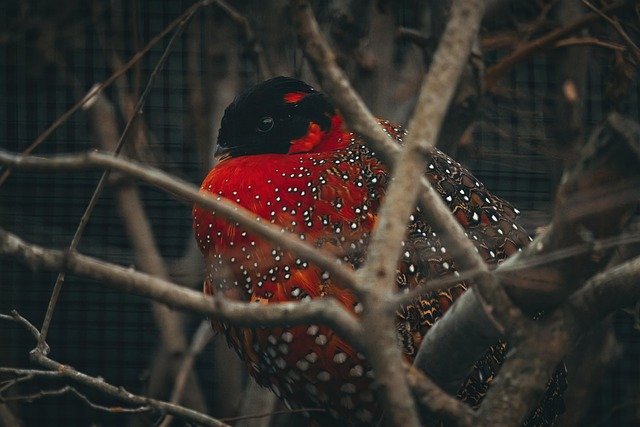
The Jujurana Jewel of the Western Himalayas
In the dense, foggy forests of high altitude Western Himalayas survives one of our world’s most elusive and incredibly handsome birds
The Western Tragopan, popularly known as the Jujurana or King of Birds to the locals. This pheasant is not just a bird but the symbol of Sikkim’s unspoiled, delicate mountain ecosystems.
Where is it Found? (Habitat)
The range of the Western Tragopan is quite limited. It is found in the temperate forests of the Himalayas of northern India within the states of Himachal Pradesh and Uttarakhand.
It prefers dense moist forests with oak rhododendron and deodar as dominant species at elevations between 2,400 to 3,600 meters. The shy and elusive bird seldom emerges into the open, so catching a glimpse is a rare treat even for committed naturalists.
What is its Colour? (Appearance)
The male Jujurana is possibly one of the most vibrant birds in existence. Its colors, a gaudy mélange:
Head & Neck: Has a unique black head with bright red throat patch (wattle) which is encircled by a collar of blue skin. It displays fleshy, blue-and-red horns while it flies.
Body : The body is dark crimson-red and has large white bold white spots outlined with black. The underparts are black and grey divided.
The female on the other hand, is hidden in brown, grey or buff with fine white lines and spots. This muted plumage allows her to remain hidden when she nests on the ground.
What Does it Like to Eat? (Diet)
Diet The Western Tragopan is largely a herbivore. It feeds seasonally:
It feeds on a wide range of leaves, shoots, seeds, berries and roots.
It also feeds on insects and other invertebrates during the summer.
It spends most of its time feeding on the ground, but will climb trees and scrubs for fruits or tender leaves.
How Rare is It? (Conservation Status)
The Western tragopan is very rare and critically endangered. It is classified as Vulnerable on the IUCN Red List of Threatened Species. The total global population is believed to be just a few thousand mature individuals, and the trend is decreasing.
Habitat destruction and degradation, it is:
Habitat Loss & Fragmentation: Caused by clearing of forests, roads and other infrastructure projects.
Threats Human Disturbance
Cattle grazing and forest products collection disrupts its shy behaviour.
Threats–Poaching : Even though, it is protected wild activity of killing for its beautiful feathers and meat still takes place in some regions.
Importance
Because of its rarity and beauty, the Western Tragopan been declared State Bird of Himachal Pradesh.
Campaigns for conservation (community-driven particularly) and the setting up of sanctuaries such as the Great Himalayan National Park and the Tragopan Sanctuary are being done to prevent this gem of Himalayas from going extinct.
In short, the Jujurana is not just a bird, but the testimony of life in high mountains. Saving it is saving the health of a whole Himalayan ecosystem.
Here are some more cool facts about the Western Tragopan (Jujurana) in English:
Courtship Display
The male dances beautifully and intricately to entice the female. He puffs out his colorful feathers, bowing with head down and flaunting the bright red and blue skin of his wattle in an equally flashy performance. It is one of the more spectacular courtship displays in nature.
Identification and Call
This bird is mostly silent, however, during the breeding season the male makes a loud, deep and far-carrying call on its territory that has been described as sounding like a repeated “waa…waa…waa.” This call can carry miles through the dense forest.
Conservation Breeding Programs:
In Himachal Pradesh’s Sarahan area, the Jujurana Project is engaged in captive breeding and conservation of the bird. There are currently efforts to breed them in captivity and reintroduce back into protected wild areas.
Other Names
It has a number of local names in the different regions where it grows, including:
King of the Jungle – Jujurana (in Himachal)
Dudhor (in Kashmir)
Phulii (in some areas)
Specific Habits
It is primarily crepuscular or active during the early morning and late evening.
At night it roosts high in trees to escape ground predators.
In severe winters it goes to lower elevation where there is deep snow.
Natural Predators
Its eggs and chicks are threatened by foxes, wild cats (such as jungle cats) and martens. Its biggest threat, however, continues to be habitat loss and degradation through human activities that include logging.
Cultural Significance
It is considered sacred by local villages in Himachal Pradesh. Among certain tribal communities, the Jujurana is considered as an omen of well-being and harmony with nature.
International Attention
The Western Tragopan, is referred as a ”Holy Grail”, for birdwatchers globally. Birders from around the world head for the Himalayas in hope of getting a sighting of this shy bird.
Final Note:
Jujurana is not only a bird but also a bio-indicator of our life giving Himalayan forests. Its very existence means our forests, water sources and the larger ecosystem are whole and doing well.