
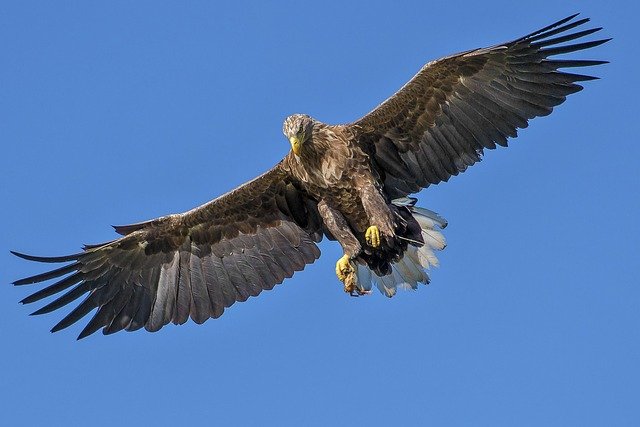
The Philippine Eagle
The King of the Philippine Sky
The Philippine Eagle, or the Monkey-Eating eagle, is not just a bird; it is also the national symbol of the Philippines and one of Mother Earth’s mightiest and rarest birds of prey.
The ruler of the Philippine rainforests boasts both a crown and an imperial gaze. The fact that it remains is a testament to the archipelago’s astonishing biodiversity — and the urgency of conservation.
Where is it Found?
(Habitat and Range)
The bird is also native to the Philippines and thus cannot be found anywhere else in the world. Four large islands represent its distribution:
Luzon: Mainly in the Sierra Madre.
Samar
Leyte
Mindanao: This island houses the biggest remaining populations, especially in the mountains of Apayao, Davao, and Cotabato.
Habitat The bird is found in undisturbed, primary and secondary dipterocarp rainforests – primarily on steep hillsides from about 700 m to the highest peak of Mt. It is highly dependent on large, intact expanses of forest (approximately 70-130 km2 per breeding pair) to find food and build their nests high in emergent trees.
What is its Colour?
(Appearance)
The Mindanao eagle is a magnificently powerful and striking looking bird:
Description The upper parts and wings are dark, rich brown to chocolate brown. The under parts and under-wings are creamy white to light buff.
Crest Its most distinctive feature is the long (in excess of 6 cm), streky, brown and white crest, erected when alarmed so that it can look “like a lion’s mane”.
Face and beak Superb binocular vision (for hunting in thick canopy) is made possible by large, intense blue-gray eyes and a dark strong arched bill which is bluish-gray.
Size: It’s one of the biggest eagles in the world. It grows up to a meter tall (give or take), has a wingspan of over 2 meters, and weighs between 4.5-8 kg (10–18 lbs).
What Does it Like to Eat? (Diet)
Although its iconic old name “Monkey-eating Eagle” is unbeatable, it doesn’t only eat primates:
Main Prey It prefers tree-dwelling mammals such as Philippine flying lemurs (colugos), several types of monkeys (macaques) and fruit bats.
Other Prey: The bird will also catch bigger birds (such as hornbills and owls), reptiles (snakes and monitor lizards) our young deer or pigs.
Hunting Style It’s a superb and stealthy hunter. It frequently uses the “still-hunting” technique, where it sits in complete silence on a high perch and then makes a sudden swift merciless surprise attack seizing prey from branches or even mid-air.
How Rare is it?
(Conservation Status)
Philippine Eagle is now listed as “Critically Endangered” by the IUCN. It is one of the scarcest eagles in the world, with between 400 and 800 mature individuals remaining in the wild, and its population is decreasing.
Primary Threats
Deforestation The devastation of its rainforest home by logging, mining, and agriculture is a major threat. It cannot live without large, old-growth forests.
Hunting & Shooting Eagles are still shot because people fear them, for sport, or by being caught accidentally in traps set for other animals.
Low Reproduction Rate: The life cycle of this species is very long. Pairs fledge only one chick from each nest every two to four years. The chick is reliant on its parents for two years so recovery of populations is painfully slow.
Conservation Efforts
Legal Protection: Formally, it is covered by Philippine law (Republic Act 9147), which prohibits any damage to the species.
Captive breeding The Philippine Eagle Foundation runs a successful captive breeding program at Davao City, producing several eagles for eventual reintroduction.
Guardian Programs Local indigenous communities are employed as ‘eagle guardians’ to care for nests and support public awareness.
Reforestation Work continues to repair and join up depleted forest sites.
The Philippine Eagle is the king of the jungle, an ambassador for balance in its environment and a force to be accounted for when it comes to preserving what remains of these rainforests. Its perilous extinction is a barometer for the country’s forests.
Saving this iconic bird is a race against the clock, demanding unwavering focus on habitat conservation, rigorous law enforcement and community education. Its existence won’t only be about saving a species, it would be in the name of maintaining the natural endowment and ecological balance of the entire Filipino country
The Great Philippine Eagle: Exploring the Life Of A Critically Endangered Kingdom
Reportedly monogamous, the Philippine Eagle (Pithecophaga jefferyi) is not just a bird but also a biological wonder, cultural symbol and indicator species for the well-being of rainforests across the Philippine archipelago. The massive bird of prey is one of the largest and most powerful of all eagles, and its presence cuts through the very fabric of the national identity and ecological balance.
Detailed Habitat, Range, and Behavior
Endemic and Insular:This eagle is endemic to the Philippines, evolving in isolation over millions of years. It’s now confined to fragments of forest on just four islands: Luzon, Samar, Leyte and Mindanao. The most numerous, about 200-400 pairs, occupy the mountains of rough Mindanao.
Depends entirely on mature, closed-canopy, tropical rainforest; it prefers hilly and mountainous areas from elevations of 150 to 1,800 meters above sea-level. It needs “emergent” trees — the tallest that stick up above the forest canopy — for nesting and outlooks. A:
-Each breeding pair requires an enormous home range of 60 to 130 square kilometers in which it can find enough food, making it a symbol of wilderness.
Monogamous and Long-lasting: Pairs are monogamous for lifetime and have sustainable long life, up to 40-60 years or more in the wild.
Slow to Reproduce: A female only lays one egg every two years. Incubation for the 58-60 day period is shared by both parents. It takes 5-6 months for the chick to leave the nest, and it continues to rely on its parents for food until almost two years of age, one of the longest dependency periods known in any bird. This low cycle rate is most unfavorable with regard to population recovery.
While flying, it is surprisingly nimble, for a creature of its size and utilizes its large wings to glide on updrafts above the jungle and perform controlled descents through its dense canopy.
In-Depth Appearance and Physical Adaptations
Size and Appearance: Alongside the Harpy Eagle and Steller’s Sea Eagle, it is one of the world’s largest eagles in terms of length. It measures about 1 metre (3.3 ft)L in height, with a wing span of over 2 metres (6.5 feet). Females are generally 10% to 20% larger than males.
Distinctive Coloration and Features:
The brown and white shaggy long crest is used for more than looks as its raised during alertness or when excited or threatened, making the eagle look physically larger and intimidating.
The dark brown above flatters with the shade of the shadow when seen from overhead, while creamy-white below blends nicely into a bright sky for those looking up—a case of classic predator countershading.
It has one of the largest eagle beaks in proportion to its size, ‘large and massive’, bluish-grey with a very high arch that can crush bones with ease and tear off hard hide. It has thick, powerful yellow legs capped with huge razor sharp talons. The middle claw can exceed 5 cm (2 inches) in length.
Its eyes are a bright, tie blue-gray color, and it can see 3-8 times better than humans; anyone within a kilometer of the Dragon is considered to have Blindsense.
Detailed Diet and Hunting Ecology
Diet Spectrum Although well known as a monkey hunter (hence Pithecophaga means “monkey eater”), it is not the only or primary prey. Key prey includes:
Notable Arboreal Mammals (Primate): Philippine Flying Lemur (Colugo – up to 60% of diet in some areas) Nutritional Low: Various species of macaques, various civet cats.
Prey Other larger birds like hornbills and owls, reptilians (rabbits snakes and monitor lizards), and young ungulates occasionaly such as Philippine deer[sub]3[/sub].
How It Hunts The hoverfly uses a form of integrated pest management called the “perch-and-wait” method. It perches quietly for hours on a high perch stand near natural clearings or openings in the forest, relying on its phenomenal vision to scan for any movement.
The attack is a surprise, explosive descent on prey from the air or branches with crushing force. Its prey also can be of its own body size.
Where It Stands How Bad Is Its Rarity and Conservation Fight?
Population: Its population reaches only about 400-800 mature individuals and due to that the species is listed with the status Critically Endangered. Certain subpopulations on the smaller islands of Samar and Leyte may contain fewer than 20 pairs.
Primary Threats:
TERRIBLE DEFORESTATION: The forest cover of Philippine has declined by more than 70 percent. Nest and hunting habitat are destroyed by logging, both illegal and legal, while mining as well as conversion to agriculture (notably oil palm and fruit plantations) further affect the owl’s remaining population.
Culling and Shoting Unfortunately, despite very strict gun laws, eagles are shot because they are perceived as a threat to livestock or simply through ignorance. They’re also collateral in traps set for other animals.
Human Disturbance Nest failure is frequent on human-related interference around the nest sites leading to the desertion of single egg or chick by parents.
Climate Change In higher intensity typhoons nests may be destroyed and fragmented rainforest habitat remaining split.
Intensive Conservation Efforts
Philippine Eagle Foundation (PEF)
The main organization headquartered in Davao City. Their work includes:
World-Class Captive Breeding A difficult (Task) because the bird is so sensitive. Success in the area is cause for optimism with regard to possible re-introductions and being genetic insurance.
Field Research and Monitoring: Crews monitor known pairs, protect active nests and study eagle ecology.
Community-Based Conservation: The “Eagle Guardian” program hires and trains indigenous community members to protect nest sites, converting once-hunters into fierce defenders. A great deal of education initiatives run in the local schools.
Protection: Killing the Philippine Eagle is punishable by up to 12 years in prison and hefty fines under Republic Act (RA) 9147, also known as the Wildlife Resources Conservation and Protection Act.
Habitat Protection: Campaigns for the creation and enforcement of protected areas such as the Mount Apo and Mount Kitanglad Natural Parks are ongoing.
Cultural Significance and Symbolism
Treasure of the Nation In 1995, it was proclaimed the national bird and is now depicted on passports, currency, and a host of official seals. It represents power, independence and distinctive natural heritage.
Ancestor’s Importance: To several indo-Malayan Lamad groups, the eagle spirit is sacred; here also a messenger and an omen. Its presence is deeply respected.