The Magnificent California Condor King of the Skies
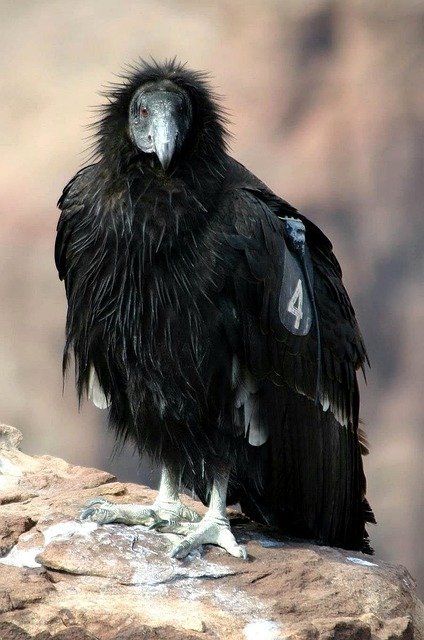
In the canyons and cliffs of North America dwells a real giant of the sky—California Condor. With a wingspan large enough to make a small plane jealous, the bird is not just rare; it stands as a living symbol of survival, resilience and one of the world’s most remarkable conservation efforts.
Where is it Found? (Kahan Paya Jata Hai?)
Today the California Condor is only present in remote, rough areas of the western United States and northern Mexico:
Central and Southern California Coastal Range: Covers the Big Sur region north to Sierra Nevada.
Northern Arizona and Southern Utah: Especially around the Grand Canyon and Zion National Park.
Northern Baja California, Mexico.
They depend on wildlife corridors for nesting and roosting in remote, high-altitude habitats: steep cliffs, rocky outcrops and large trees, with open grasslands, oak savannas and beaches below for feeding.
What is its Color? (Rang Kya Hota Hai?)
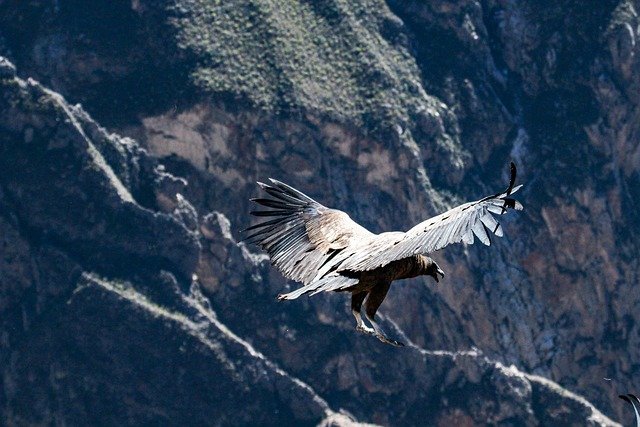
The California Condor is mostly black, but has some very eye catching traits:
A slender black down covers its body.
The underwing of the enormous wings plane makes a striking large bright white triangle, which is seen well in flight.
It has a nearly bald head and neck, colored yellowish-orange to pinkish-red. This abstract head is a hygiene-wise practical adaptation.
The adults are noted for their frill of black feathers at the base of the neck that therefore makes it look like they are wearing a shawl.
What Does it Like to Eat? (Khanaay Mein Kya Pasand Hai?)
The California Condor is a scavenger (feeds on carrion). It does not hunt live prey.
Its diet is nearly 100-percent dead animals, including deer and cattle but mostly sealed and whales and other large wildlife.
Relying on its keen vision, it glides for hours to find a meal from hundreds of feet away. Its formidable hooked beak is an ideal tool for rending rawhide.
How Rare is it? (Kitna Neyab Hai?)
The California Condor is on the brink of extinction and it is one f the most threatened birds in the world. Its tale is one of tragedy and hope:
By 1987, between lead poisoning (from eating bullet fragments left in carcasses), habitat destruction and poaching, the entire wild population was whittled down to a mere 22 birds. All of them were caught for a Hail Mary captive breeding program.
Thanks to a painstaking decadeslong effort at conservation spanning multiple governments, zoos and NGOs, condors have slowly been reintroduced into the wild.
Today, their total population (wild and captive) stands at just over 500, with about 350 flying free. Each one is monitored, and many are still undergoing treatment for lead poisoning, so its survival is ongoing thanks to human management.
What Makes it Special? (Kis Baat Se Khaas Banati Hai?)
The California Condor has some amazing characteristics:
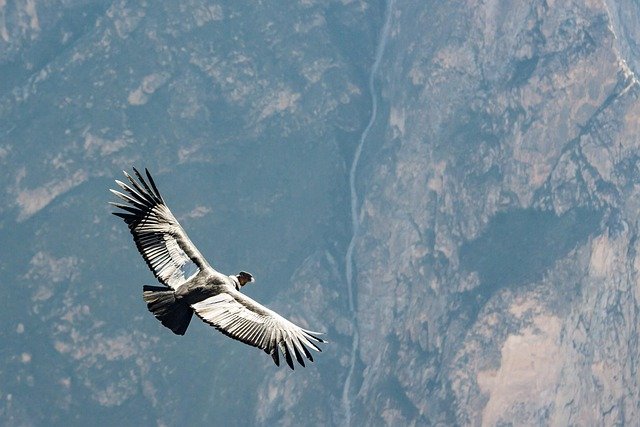
Unproclaimed Wings Its most thrilling feature. It’s got a wingspan of 9.8 feet (3 meters), the largest of any flying bird in North America. In the air, it is a magnificent gliding giant that can travel for miles without flapping its wings once.
A Conservation Icon It is the model for rescuing wildlife. Rescued from the very brink of oblivion, its survival is a demonstration of man’s commitment to and a strong reminder of ecological responsibility.
Longevity/Dulai It is known that they live a very long time, up to 60 years or more in captivity. They are also socially complex animals, they form bonds, they’re curious and show their ability to solve problems.
Natural Scavenger As the nature’s most efficient scavenger, it is an important part of the ecosystem by removing carcasses thus helping to stop disease.
The California Condor is not just a bird; it’s an airborne monument. Its shadow on the canyon walls is a symbol of human-caused peril and human-led redemption. To watch this prehistoric-looking giant soar remains a miracle of conservation — species are fighting for its future, one graceful, earthspanning glide at a time.
California Condor ko koi pasand ka poda nahi hota, kyunke yeh aik massaakhhor hai jo sirf girye hue janwarun ki chaatni khata hae.
What is “Iska ‘Pasand ka Khana’ Kya Hai? (Podon ki Jagah)
Condor doesn’t eat any plants or leaves at all. Its food is only the dead bodies of animals, such as:- 1-Flesh.
Baray ungliy haywan (deer, elk)
Denwar (cattle)
Samandari mamaliya (Cetaceans, Pinnipeds) jo kinare par mar jayein
Yeh Kis “Jangal” Mein Milta Hai1946 let’s roam in the forest of Mohan Sauboor! (Rahaish / Habitat)
California Condor Gehray, khday huYe ya khandaron wale jangle mein rehta hai lekin asal mein inka lassna aur khana dono alag alag hote hain:
Rahne aur Ghonsla Banane ke Liye (For Perching & Roosting):
Bade chattanon wale pahad ya khday They make their own nest in high/ deep khdayons (canyons) or nooks of big chattans (cliffs).
The big trees jungles Kabhiy kabhiy bade aur puraney darakht ( jaise redwood ya oak ) mein bhi ghonsla banal lete hain.
Khana Dhoondne ke Liye (For Foraging) :

Khule maidaan, ghaas ke medaan (grasslands), ya samandar kinare: Yeh woh jagaen hain jahan par yeh apna asli khana—murday haywan—dhoond’ty hain. They float for hours, using a wingspan of more than 9 feet, and keep their watchful eyes on these open expanses — waiting for the telltale signs of carrion.
Mukhtasir Mein:
( California Condor should be) poday nahi khata yes murda gosht khaat a hai. Yeh America ke maghribi ilakon (western) ke pahari jangalon men rehta hai, jaise Sierra Nevada ke pine forests, Grand Canyon ka khandar, aur California ki coastal mountains. He (Woh) lives in the high rocks of these forests and searches for his food on open grounds.